
I’ve been wanting to write this post for a while. There was only one problem—I hadn’t finished my service yet. And I figured that was a pretty necessary step before I could give you all the best information. It seemed like the day would never come, but what once seemed so far away came quicker than I could’ve imagined. Before I knew it, I had completed service. From getting on a plane not knowing what was to come to flying home two years later, I came back a completely different person.
A couple of months ago, I came back home after spending two years serving as a Youth Development Facilitator in the Dominican Republic. I have a lot to share—the highs and the lows, what I wish I knew, what I’d do differently, and more. This is that post.
What Is the Peace Corps?
If you’re reading this, you’ve probably already started to do your research. But let me give you a quick overview anyway.
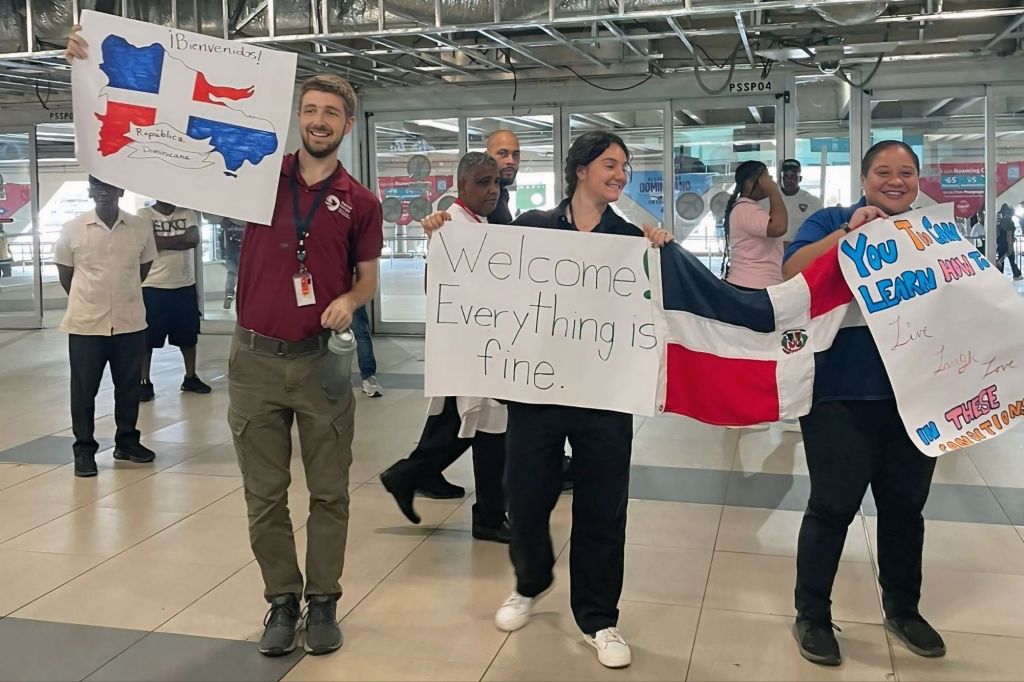
The Peace Corps is a U.S. government agency that sends American volunteers abroad to work alongside local communities and organizations.
Volunteers work in areas including agriculture, community development, education, environment, health, and youth development.
As volunteers, we have three main goals: to help people in the countries where we serve, to help Americans better understand other cultures, and to help people in our host countries better understand Americans.
And even though we call ourselves volunteers, we work full time and receive a living allowance and other benefits during service.
While Peace Corps is all of those things, it’s also so much more. It’s getting crammed into a bus or car with wayyy too many people, and not nearly enough seats. It’s eating the bare minimum like quesadillas or eggs for meals until you get your next paycheck. It’s having to find something to do when the electricity goes out. It’s feeling like a toddler learning how to walk for the first time because suddenly everything you’ve always known is different. You’re experiencing a new world for the first time.
In this post, I will give you all the ins and outs of Peace Corps service, so you can decide if it’s for you.
What I Did as a Youth Development Volunteer
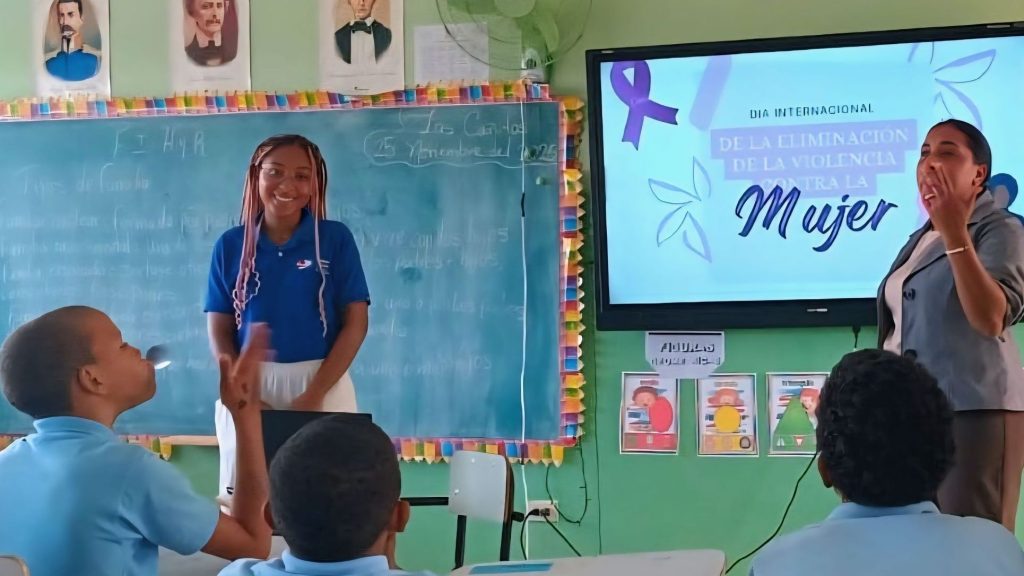
As a Youth Development Volunteer, I was tasked with helping youth—primarily middle school kids—learn the life skills they’d need to become productive adult citizens.
In the Dominican Republic, teenage pregnancy is more common than it is in the United States, and it was an issue I was particularly interested in addressing. As a women’s, gender, and sexuality studies double major, I saw this as one of the main issues I wanted to tackle during my service. I taught a comprehensive sexual health education course from the I Choose My Life curriculum. The course covered reproductive anatomy, contraceptives, sexually transmitted infections, consent, gender stereotypes, healthy decision-making, and healthy relationships.
In addition to the course, I also organized events around national and international observance days, including the International Day for the Elimination of Violence Against Women, Menstrual Hygiene Day, and International Literacy Day. I also ran an after-school club for elementary school girls focused on self-esteem, friendship, and leadership. These activities gave me the opportunity to work with students outside of the classroom and create programs around topics that were important to me and my community.
One thing I learned during my service is that Peace Corps work doesn’t always look the way you imagine it will before you leave. Sometimes you’re teaching a class or working on a project, and other times you’re sitting at a computer doing paperwork or trying to figure out why something that should be simple is taking all day. You’re not just bringing American ideas into another country and expecting people to adopt them. A huge part of the job is learning how to work within a different culture and figuring out what actually makes sense for your community.
Typical Day in the Life
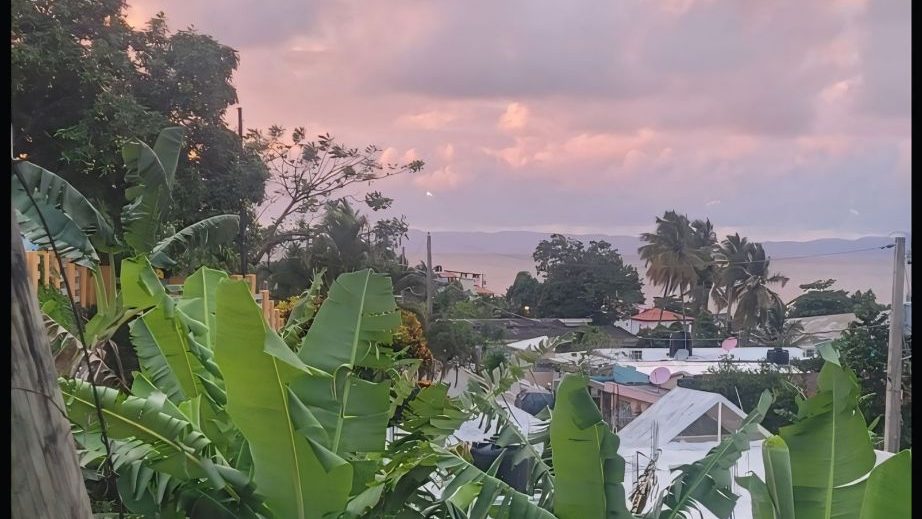
For a typical day in my life, I would wake up around 6 a.m. I might go on a run before work and make breakfast of oatmeal. I’d walk to school, which was only a few minutes away, and be there by 8 a.m. I’d do computer work and teach about one class a day. I’d eat lunch at school and get out around 4.
After school, I’d use my computer, play my ukulele, or find something to keep me busy. It was a very simple life. On weekends, I’d go to the store, which was the next town over; do my laundry—which, if you know, you know, was a whole-day ordeal—or, if I was lucky, go on a trip with some of the other Volunteers.
For a more detailed look at what a day in my life was like as a Peace Corps Volunteer… check out this post!
The Benefits
I get this question all the time:
Why should I donate two years of my time?
I understand. Two years is a long time. In my opinion, though, two years are going to pass regardless—why not have a once-in-a-lifetime journey? For me, the benefits were a mix of personal and professional.
Personal Benefits
One of the biggest personal benefits was learning a new language. I studied Spanish before Peace Corps, but living in a Spanish-speaking country took my Spanish from intermediate to advanced. There’s a huge difference between studying a language in a classroom and actually needing it to buy groceries, talk to your neighbors, teach a class, make friends, and solve everyday problems. Knowing another language is great for being able to communicate when traveling to other countries, but it can also be a valuable professional skill. I’ve found that many jobs value bilingual workers, and knowing Spanish is something I can take with me long after Peace Corps.
I also learned about a new culture. Before going to the Dominican Republic, I didn’t realize how different cultures could be. I learned about new customs, food, family dynamics, and cultural expectations. I learned that some of the things I considered “normal” were really just things that were normal to me because of where I grew up. My experiences there have impacted me in a profound way, and I think living abroad gave me a level of cultural awareness that I couldn’t have gotten from simply visiting another country.
For most positions, volunteers earn $10,000 for two years of service (pre-tax), which for me came out to about $9,000. Some higher-need positions (typically in less-desired countries, to offset the low number of applicants) can receive more — I believe up to $20,000.
Professional Benefits
Peace Corps was also valuable professionally. You’re not just spending two years traveling—you are working. You’re gaining experience communicating across cultures, working with limited resources, managing projects, and figuring out how to get things done when you don’t have all of the resources you might have had at home. With my future career path in government, getting to serve abroad and network with other people working in government and international development was extremely valuable.
The Peace Corps is also a great gateway to working for the federal government. It shows you’re willing to live in the field for two years to promote the United States’ goals. Many U.S. agencies — the State Department, foreign consular fellows, foreign service officers, the FBI, the CIA — want to hire returned Peace Corps volunteers. I hope to work with survivors of trafficking in the future, and perhaps with the federal government, so getting to serve and network with other government workers is extremely valuable.
After-Service Benefits
There are also benefits after your service ends. After two years of service, volunteers become eligible to apply for Paul D. Coverdell Fellows and Scholars programs. These only apply to certain programs at certain schools, and funding can range from $20,000 to a full ride. They have a lot of opportunities if you want to go into teaching or public relations, but sadly many programs aren’t offered with Coverdell. This really diminishes the benefits of this scholarship. It would be a lot better if returned peace corps volunteers could at least get a blanket $20k education award that could go toward any accredited university program. Luckily, Peace Corps service does count towards the 10 years of public service needed, if you’d like to get your student loans forgiven.
You also get noncompetitive eligibility — for one year after service, your government job applications get a points boost, which theoretically increases your likelihood of being hired.
What I Wish I Knew Before Joining Peace Corps
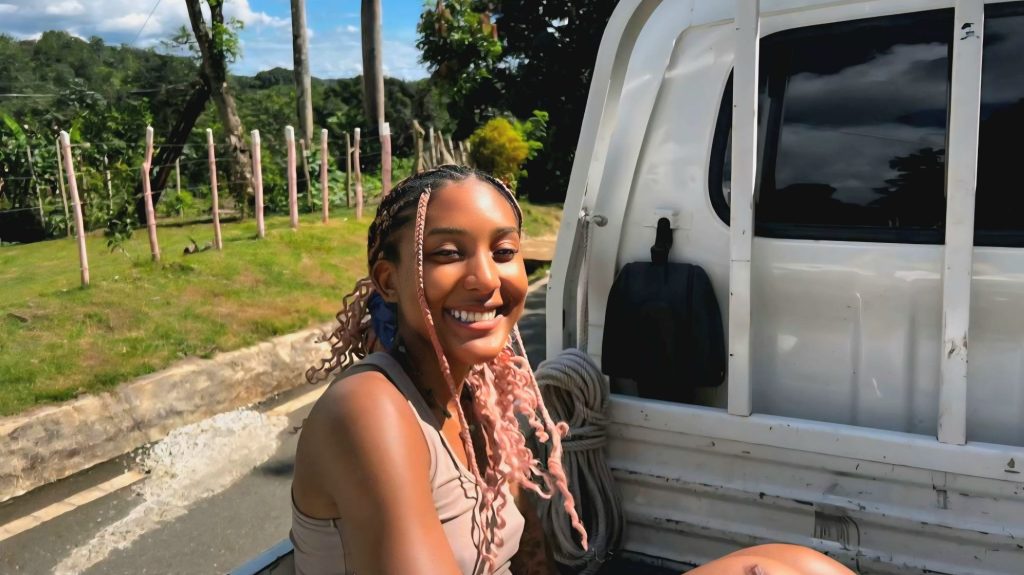
There are a lot of things I wish I knew before I got on that plane. Some things you can research beforehand, but other things you really can’t understand until you’ve lived them.
Choose Your Country Carefully
This is one of my biggest regrets — choosing to go to the Dominican Republic. Long gone are the days when you have to send in an application and get placed wherever they think you fit (although you can still request that). Today, you have the power to request exactly where you’d like to go.
Considering that, I really didn’t do my due diligence of research before choosing the Dominican Republic. I didn’t know much about the DR before choosing it. I knew it was a Black country and people spoke Spanish there. That’s pretty much it. My favorite country is Mexico; I’ve visited often and love it. I would’ve wanted to apply there, but they didn’t have a Youth Development position, so I couldn’t.
The reason I regret choosing the DR is that the culture was completely different from what I’m used to. I at least wish I had visited and known what it would be like living there. Within the first few months, I realized I didn’t particularly care for the DR as a whole—but I stuck it out for the two years. I’m not saying the Dominican Republic is bad country for volunteers. It’s a beautiful island filled with fun, open people, and many volunteers love it with some extending service or even staying there permanently. I’m just saying for me, and my personality, I’m not sure it was the best fit.
My advice: research the country. And I don’t just mean look at pictures of beaches and read travel blogs. Find out about the culture and customs. Look into the climate, transportation, food, housing, language, social norms, and what everyday life is actually like. If possible, talk to people who have lived there, especially Returned Peace Corps Volunteers.
Choose a country you’re emotionally invested in. Maybe it’s where your family is from, a country you’ve always wanted to visit, a place whose language you want to learn, or somewhere that will advance your career. Choose a country that’s meaningful to you. It’ll carry you when moments get tough.
Embrace the Suck
Despite what I just said, I do believe it’s important to have an open mind. When it’s 100+ degrees out, you have no electricity so no fan, and you’re sweating so much all you can do is lie in bed, those will be the days you’ll have to dig deep and remind yourself why you’re there.
I wish I understood more about what I was signing up for. I was signing up to live what many people would call “miserable”—without running water, consistent electricity, personal transportation, high income, or much recognition for the work I was doing. If I had known how hard it was supposed to be, I would’ve been more prepared.
That doesn’t mean you should go into Peace Corps expecting to be miserable. It means you should expect things to be different. There will be days when you’re uncomfortable, days when you’re lonely, and days when you wonder what you were thinking. But there will also be days when you realize you’re doing something you never thought you could do.
How Not to Go Broke
As a Volunteer, you receive a stipend during service and also a readjustment allowance after completing service. Volunteers can also have access to portions of that money early in certain circumstances. For the first year, I didn’t touch mine. But eventually, I started using it to supplement my overspending.
I had set aside a couple thousand dollars to sustain me throughout Peace Corps, but I ran through that once I moved out and had to buy furniture. After I took out some of my readjustment allowance once, it was easy to just have it automatically taken out each month. Looking back, this was one of the biggest financial mistakes I made during service.
Peace Corps Volunteers are supposed to live on an income similar to that of local people. I highly recommend sticking to that budget. Living at that level is part of being a Volunteer. I’ve found that sticking to the budget was way easier when I lived with a host family because they cooked my meals. Once I moved out, I had much more freedom—and many more opportunities to spend money.
Another big piece of advice: don’t spend a lot on furniture. Try to move into a furnished place if you can, although I know that can be uncommon, and only spend the bare minimum on furniture. Peace Corps gives you enough to cover the necessities, but that doesn’t mean you need to recreate your American home. Think a wood pallet bed stand, a mini fridge, and a two-burner plug-in stove instead of an oven.
I bought a real bed, a table, chairs, and other things because I wanted to make my house nice. And while it did feel like home, I don’t think it was worth it. Plus, I gave away all the furniture when I left instead of selling it. If I could do it again, I’d choose to save my money instead, and stick within the recommended Peace Corps budget for moving out.
Integrate, Integrate … and Integrate Some More
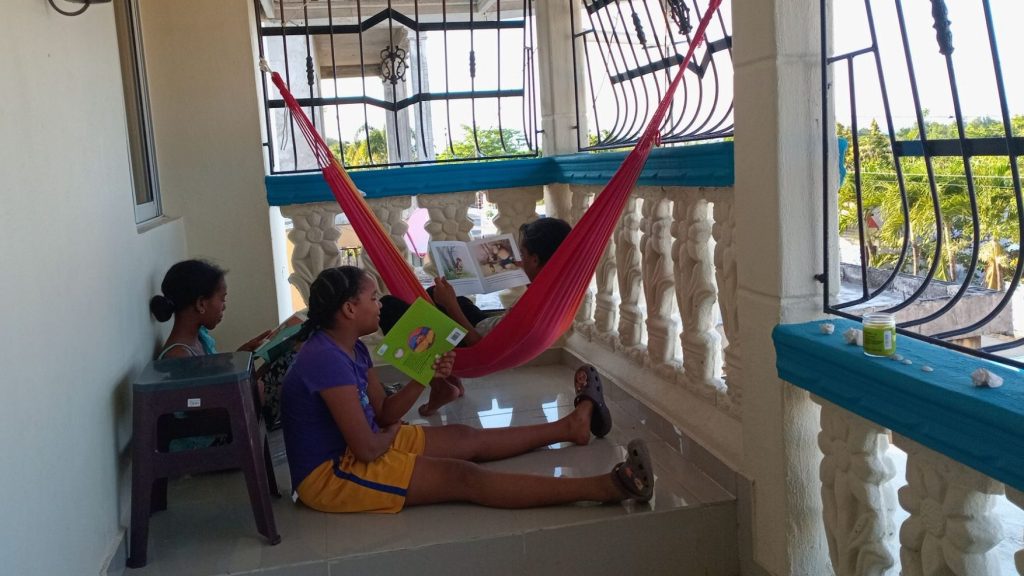
This is the Peace Corps’ primary advice, and now I can see why. I want to warn you: it can be extremely difficult. You’re speaking a language that isn’t native to you and navigating a completely different culture. People may have different ideas about privacy, family, personal space, and what is considered appropriate. Sometimes you will probably just want to go home and be around people who understand you without you having to explain yourself.
But if you can have a good relationship with your host family and local community, you’ll have connections, improve your language skills, have people to rely on, and potentially save money. Even if they can be difficult to put up with sometimes—they may be all in your personal space or have unique cultural rules that don’t quite make sense to you—I strongly advise you to try your best to make it work.
I’ve found that most locals really appreciate it when you make an effort to spend time with them. You don’t have to become a completely different person or love every part of the culture. You just have to be willing to meet people halfway.
Pros and Cons
Pros
- Learn a new language
- Learn about a new culture
- Make friends with other Volunteers (one of the best parts of the job!)
- Gain professional work experience
- Develop independence
- Live abroad for two years
- Potential federal employment benefits
- Potential education benefits after service
- Receive financial support during service
- Receive a readjustment allowance after completing service
- Have Peace Corps support and resources during your service
Cons
- Isolation (living thousands of miles away in a rural community of people different than you can be pretty lonely at times)
- Many rules and strict standards for Volunteers
- Chance of no running water or electricity
- Low income
- Limited transportation
- Culture shock
- Language barriers
- Limited privacy
- Being far away from family and friends
Is Peace Corps Right for You?
If I were you, I’d ask myself: Why do I want to serve in Peace Corps?
Is it because you want to make a difference in the lives of others? Are you doing it because you want to travel? Are you doing it because you don’t know what else to do?
All those things matter.
Peace Corps is less about traveling and more about deeply immersing yourself into a culture; think college-level deep analysis. You WILL know your country like the back of your hand. You’ll know how the transportation works, where to buy groceries, which places you like, and probably more about your community than you ever expected to know.
But it will be extremely difficult. You will need to be open and flexible and willing to be uncomfortable. There will be mental and emotional troughs when things get tough, and you need to be prepared for the possibility that the reality of service won’t match the picture you had in your head.
In my opinion, you shouldn’t come in with too many expectations. You won’t know where you’re living or the exact job you’ll have until you’ve been through training and had site visits. Even after you arrive at your site, things can change.
It’s important that you’re willing to be open and kind to the local community, as well as willing to learn from the people around you. And if you’re asked to live with a host family, try to go into it with an open mind. It may not always be easy, but your relationships with the people around you can end up being one of the most meaningful parts of your service.
Would I Do It Again?
Two years is a long time. When I got on that plane to the Dominican Republic, I had no idea what was waiting for me. I didn’t know how difficult it would be, how much I would change, or the people and experiences that would become such an important part of my life.
There were plenty of moments when I was lonely, frustrated, uncomfortable, or just ready to go home. But there were also incredible moments. I learned Spanish. I learned about another culture. I taught young people. I made lifelong friends. I learned how little I actually need to be happy. And I came home with a completely different perspective than the one I left with.
Would I recommend Peace Corps to everyone? No, of course, not. I wouldn’t even recommend it for most. But if you’re willing to be uncomfortable, open your mind, learn from the people around you, and truly immerse yourself in another community, I think Peace Corps can be an incredible experience.
For me, it was worth it.
And even knowing everything I know now, I would do it again.
Have any specific questions about serving in Peace Corps? Drop them down below and I’ll be sure to answer them!




Leave a comment