
Do Peace Corps volunteers get paid?
There are many financial questions surrounding Peace Corps volunteers. And I understand the confusion. We are called volunteers, so you would think the position is unpaid. But nope—we still get a paycheck, or a stipend as they call it.
As a returned Peace Corps volunteer who served in the Dominican Republic, I’m going to break down exactly how much I earned, what my stipend covered, and where that money went.
While the stipend was enough for me to cover my basic expenses, money wasn’t the only factor I considered when looking back on my service. Is Peace Corps Worth It? What I Wish I Knew Before Serving in the Dominican Republic is a separate look at my overall experience and whether I would make the same decision again.
The Peace Corps stipend depends on whether you live with a host family or have moved out on your own. In some countries, volunteers are required to live with a host family for their entire service. In the Dominican Republic, however, volunteers are allowed to move out three months after arriving, following our three-month in-service training period.
Peace Corps provides volunteers with an estimated budget, based on how much they think volunteers will and should spend on each category. Let’s start with what my finances looked like while I lived with a host family.
Living With a Host Family
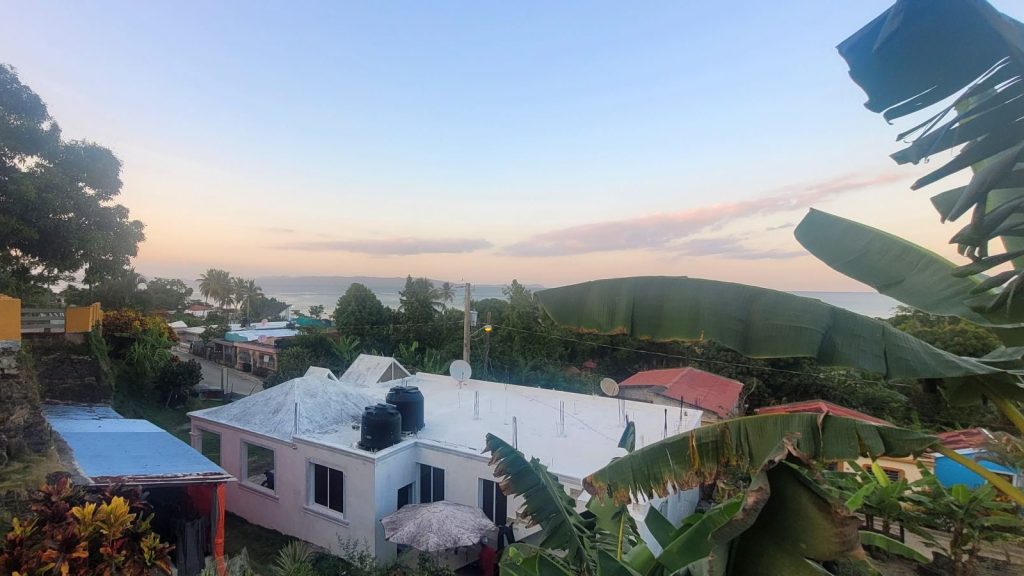
While living with a host family, I earned 28,200 Dominican pesos per month, or about $475 USD. I lived in a rural town with a mom, dad, brother, and sister.
Here’s how that stipend was broken down:
Housing and Food — $16,000 pesos ($269 USD)
While living with a host family, I paid my host family $16,000 pesos per month. This covered both rent and food, which was approximated as $6,000 pesos for rent and $10,000 pesos for food.
My host family cooked me two meals a day on school days, and I would eat lunch at school. Because of this arrangement, I didn’t have to budget separately for most of my meals. I usually only paid for food when I was buying something extra, like empanadas or smoothies as snacks, or if I was going to dinner on a special occasion.
Communication — $1,100 pesos ($18.50 USD)
During Peace Corps, volunteers could either choose to keep their personal phone or receive a basic Peace Corps phone. We were also provided with Dominican SIM cards.
I initially used a Peace Corps phone but eventually switched to my personal phone. I had a Samsung that allowed me to use two SIM cards, so I could keep both my American and Dominican phone numbers on the same device.
Peace Corps allotted $1,100 pesos per month for communication expenses. Since we didn’t have to worry about purchasing a phone or paying for a traditional phone plan, I’m assuming this money was primarily intended for Wi-Fi and mobile data.
You could spend the money on international phone calls, but pretty much everyone in the Dominican Republic uses WhatsApp, which made communicating with friends and family much easier.
Based on what I remember, mobile data cost around $180 pesos for five days, which would come out to approximately $1,080 pesos per month—almost exactly the allotted communication budget.
Transportation — $1,500 pesos ($25.25 USD)
The transportation section covers using the bus to travel between cities. Peace Corps volunteers are not allowed to drive or operate motor vehicles. This includes cars, motorcycles, atvs, electric bicycles, etc.
We’re also not even allowed to be passengers on motorcycles, which was difficult as motos are the main form of transportation in the Dominican Republic, especially in rural communities.
While I lived close enough to my school to walk, I took the bus when going to other towns, visiting other volunteers, or participating in training in the capital Santo Domingo.
Personal & Household expenses — $4,600 pesos ($77 USD)
I was given almost $5k pesos for personal and household expenses and I’ll break down that below:
Personal Care – $2,000 pesos ($33 USD)
Peace Corps also provided $2,500 pesos per month for personal sundries and discretionary expenses.
This was essentially the portion of the stipend that was intended to be used for miscellaneous personal expenses, like soap, shampoo, conditioner, toothbrushes and toothpaste, etc.
Clothing — $800 pesos ($13.50 USD)
Peace Corps suggested budgeting $800 pesos per month for clothing.
Paca stores are very popular in the Dominican Republic. These are essentially secondhand clothing stores where you can find clothes for much less than you would pay at a traditional retail store.
While $800 pesos won’t get you very far at the malls in Santo Domingo or other major cities, it can be enough to pick up a couple of items at a paca store.
Menstrual Hygiene — $500 pesos ($8.50 USD)
Of the $2,500 pesos allocated for personal sundries, $500 pesos was specifically allotted for menstrual hygiene products. This allowance was only provided to female volunteers.
Household supplies — $1300 pesos ($22 USD)
This money can be used for buying cleaning supplies, toilet paper, paper towels, etc.
Leave Allowance — $2,400 pesos ($40 USD)
Volunteers were encouraged to take R&R, or rest and relaxation, about one weekend per month.
To help cover these trips, Peace Corps provided a $2,400 peso monthly leave allowance that could be used toward a hostel stay.
The leave allowance would likely not be enough to cover a trip back to the United States, however, unless you saved the money by not taking your monthly R&Rs.
Discretionary — $2,600 ($145 USD)
Of course, the proposed budget doesn’t cover everything. So this can be used for any other purchases you would want to buy.
Moved Out and Living Alone
In the Dominican Republic, Peace Corps volunteers must wait till after 3-month in service training, where you learn the process of moving out, before requesting to live alone. The process can take weeks, or months, as the volunteer is responsible for finding a place within Peace Corps budget, requesting Peace Corps’ safety and security to approve the place (they have certain safety requirements), and waiting up to 4 weeks for Peace Corps to deposit the move out allowance. Volunteers are given about $12k if moving into a furnished home, and $40k if moving into an unfurnished one, in order to assist with re-settling.
After three months of service, I moved out of my host family’s home and into my own apartment. It was the second story of another family’s home. I had my own entrance, a gallery, 2 bedrooms, a living room, and a kitchen.
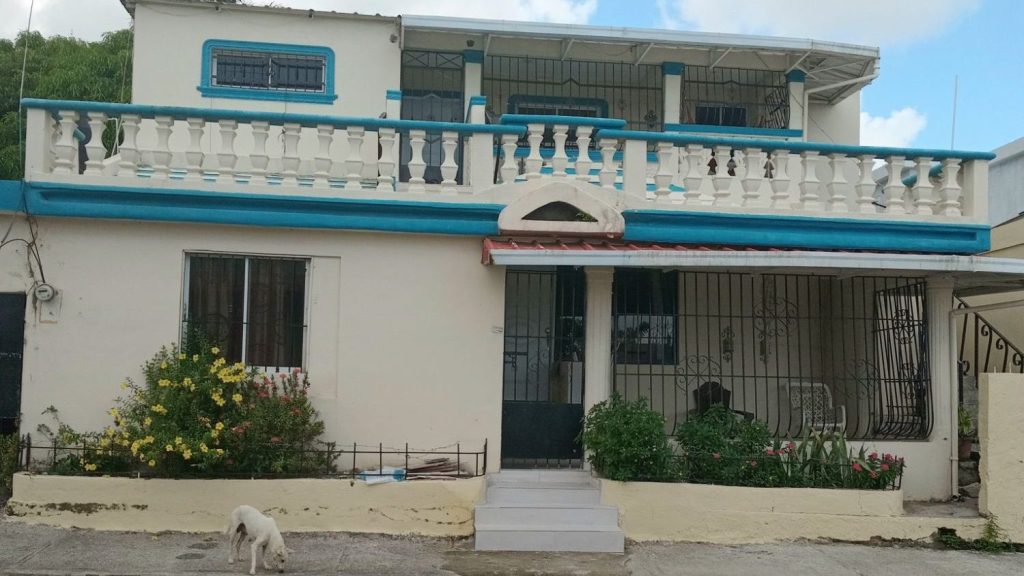
Once I moved out, my monthly stipend increased to approximately 34,800 Dominican pesos. This increase came because my rent had increased from $6,000 while living with my host family to $10,000 pesos.
That was a significant increase from the $28k pesos I received while living with a host family, but I also had more expenses. My transportation, communication, personal & household expenses, discretionary, and leave allowance all stayed the same, but I was now responsible for paying for my own housing, food, and utilities.
Here’s how my monthly expenses broke down:
Rent — $10,000 pesos ($168 USD)
I rented a two-bedroom apartment for $10,000 pesos per month. $6,000 pesos is the base rate for housing, but if your house costs more they will increase your monthly budget by that much. When I was a volunteer, they approved up to $12,000 pesos in more populated towns. However, as I was leaving, they began getting stricter about approving housing over the budget and encouraging volunteers to live together rather than live separately.
Utilities — $2,000 pesos ($33 USD)
$2k pesos is allotted for utilities, such as water and electricity. My utilities were included in my rent, so this was $2k pesos that I could save. I don’t know any volunteers that had to pay for water, but some had to pay a light bill separately from their rent.
Food — $10,600 pesos ($178 USD)
Unlike when I lived with my host family, I was now responsible for purchasing and preparing my own meals. Peace Corps assumes your food budget will go up once living alone and allows an extra $600 pesos a month. During the first months of living at site, Peace Corps recommends that you visit the local markets with your host family to get a sense of how much food should cost, to avoid overpaying.
Pros and Cons of Each Living Situation
Coming into Peace Corps, I was pretty apprehensive about living with a host family. I knew that I wanted to live independently once I got the chance, because I value my freedom and independence. Now that I’ve done both, I see that both options have their advantages and disadvantages.
Living With a Host Family
Pros:
- Housing and food were combined into one monthly payment.
- I didn’t have to worry about grocery shopping or cooking most of my meals.
- I had built-in support from my host family.
- I was more immersed in Dominican culture and daily life.
- My monthly expenses were more predictable.
- I spent less money
Cons:
- Less privacy and independence.
- I had to follow my host family’s household rules and routines.
- I had less control over what and when I ate.
- Living with another family could sometimes be an adjustment.
Living Alone
Pros:
- Much more privacy and independence.
- I could leave whenever I wanted.
- I could choose what and when I ate.
- I could have friends or other volunteers over.
- I had more control over my daily routine.
- I had more space and freedom to make my apartment feel like home.
Cons:
- I was responsible for buying and cooking all of my own food.
- I had to pay rent and utilities separately.
- I had more household responsibilities to keep the space clean.
- I had fewer built-in opportunities for cultural immersion.
- Less safety as I was a young, female foreigner living alone.
What I Wish I Had Done Differently
If there is one thing I wish I had done differently as a Peace Corps volunteer, it would have been to follow the budget Peace Corps gave me more closely.
As an American, I was used to going to the store often and buying things that weren’t necessarily necessities. Peace Corps is meant to be hard. Part of the experience is learning what it’s like to live as a local in the country where you’re serving.
I know that’s easier said than done, but I wish I had embraced the experience more and tried harder to stay within the budget instead of relying on my American savings whenever things got difficult.
I would say that three things in particular contributed to my overspending.
1. Moving Out
The first was moving out of my host family’s home. I ended up spending more money at grocery stores and eating out than I would have if I had stayed with my host family and continued eating the meals they provided.
When I lived with my host family, food was included in the $16,000 pesos I paid them each month. Once I moved out, I was responsible for buying and preparing all of my own meals. It was easy to spend more than I had planned, especially when I didn’t feel like cooking.
2. Traveling
The second was traveling.
Volunteers are encouraged to travel once a month to get out of the confines of their site and spend time with other volunteers. I agree that this can be very beneficial for the mental health of volunteers, and I don’t regret traveling during my service. I saw beautiful parts of the island and had amazing experiences.
However, I wish I had focused more on staying at other volunteers’ houses instead of traveling to more touristy destinations and paying for hotels.
And once I was traveling, the expenses quickly added up. There were restaurant meals, transportation, excursions, and other activities that I could have done without. Staying with other volunteers would have allowed me to get the social benefits of traveling without spending nearly as much money.
3. Adopting a Puppy
Lastly, I adopted a puppy.
My baby followed me home one day, and the rest was history.
While adopting her was one of the best things that happened to me during Peace Corps, it was definitely not the most budget-friendly decision.
Vet visits and vaccinations were some of the biggest expenses. I also had to pay someone to watch her whenever I went out of town, in addition to the normal costs of having a dog, such as food, a crate, a leash, toys, and other supplies. Having a puppy was overall a huge responsibility that I wasn’t entirely prepared for.
Looking back, I definitely should have considered those expenses more carefully. They felt worth it at the time, but they did make it much harder to stick to the budget Peace Corps had given me. If I ever serve with Peace Corps again, I will try to find a better balance between enjoying my time while also being disciplined with my spending.
Was Peace Corps Worth It?
Of course, the financial side of Peace Corps is only part of the story. While the stipend was enough to cover my basic expenses, the bigger question is whether the overall experience was worth it.
I wrote more about my experience in Is Peace Corps Worth It? What I Wish I Knew Before Serving in the Dominican Republic, where I break down the good, the bad, and everything in between.



Leave a comment