
Rio de Janeiro is one of the most exciting cities in the world. Between the famous beaches, vibrant nightlife, incredible food, and the legendary Carnival celebrations, it’s a destination that offers something for everyone.
However, it helps to know a few things before you go. Here are 10 important travel tips for visiting Rio de Janeiro, including advice on money, safety, transportation, Carnival, beaches, food, and local culture.

1. Money in Rio (Cash vs. Cards)
Carry Some Cash
While many businesses in Rio accept credit cards, it’s still a good idea to carry a small amount of cash with you. I was honestly surprised by how many sreet vendors, beach sellers, and small stands had a card reader. I believe the only time I had to pay with cash was for the metro and busses.
During my trip, I originally only carried around 200 Brazilian Reais at a time because I was worried about theft, but I quickly realized that level of caution probably wasn’t necessary.
I kept my money in a wallet inside my fanny pack worn across my waist, which felt secure and convenient. A small crossbody bag would also work well. The most important thing is simply keeping your belongings on you, especially when you’re in crowded areas like Carnival street parties.
Throughout my entire trip, I kept my valuables close and never experienced any issues with theft.
Bring a Travel Credit Card
I highly recommended bringing a credit for card when traveling in Rio. I actually brought two debit cards with me, but neither of them worked properly for purchases. For some reason, many payment terminals required selecting “credit” rather than “debit.” Because of that, I could only use my debit cards to withdraw cash from ATMs.
A credit card is helpful because:
- You don’t have to carry large amounts of cash
- Transactions are quick and easy
- You can cancel the card quickly if it’s lost or stolen
One tip I heard before traveling was to always double-check the amount on the card reader before tapping or inserting your card. This is just a smart habit whenever traveling internationally.
Overall, Rio is a very developed city, and most restaurants, stores, and even street vendors accept cards.
Finding ATMs
ATMs were fairly easy to find in Copacabana, and several were located inside metro stations as well.
However, I noticed that ATMs were a little harder to find in Ipanema, so it’s a good idea to withdraw cash whenever you see one if you’re running low.
2. Is Rio de Janeiro Safe?
Before traveling to Brazil, we constantly heard warnings about how dangerous the country supposedly was. People told us to stay alert, protect our belongings, and be extremely careful.
Because of this, we were probably way more cautious than we needed to be.
I felt much safer than I expected.
Like any major city, there are neighborhoods where you should be more careful. But in the main tourist areas— Copacabana and Ipanema —I felt comfortable walking around 100% of the time.
Theft
I feel like people overexxagerated the theft issue in Rio during Carnival, but maybe that’s only because I didn’t personally experience any theft during my trip. I kept my belongings securely on me with a phone strap and a fannypack. However, I also left my bag with strangers whenever a went to the beach and luckily those kind souls watched my belongings for me.
Although I had no issues, it’s still important to stay aware of your surroundings and be smart. Like in any destination, taking simple precautions—such as keeping an eye on your belongings and avoiding poorly lit areas at night—can help ensure a safe and enjoyable experience.
Respect Toward Women
One thing that surprised me the most was the level of respect toward women.
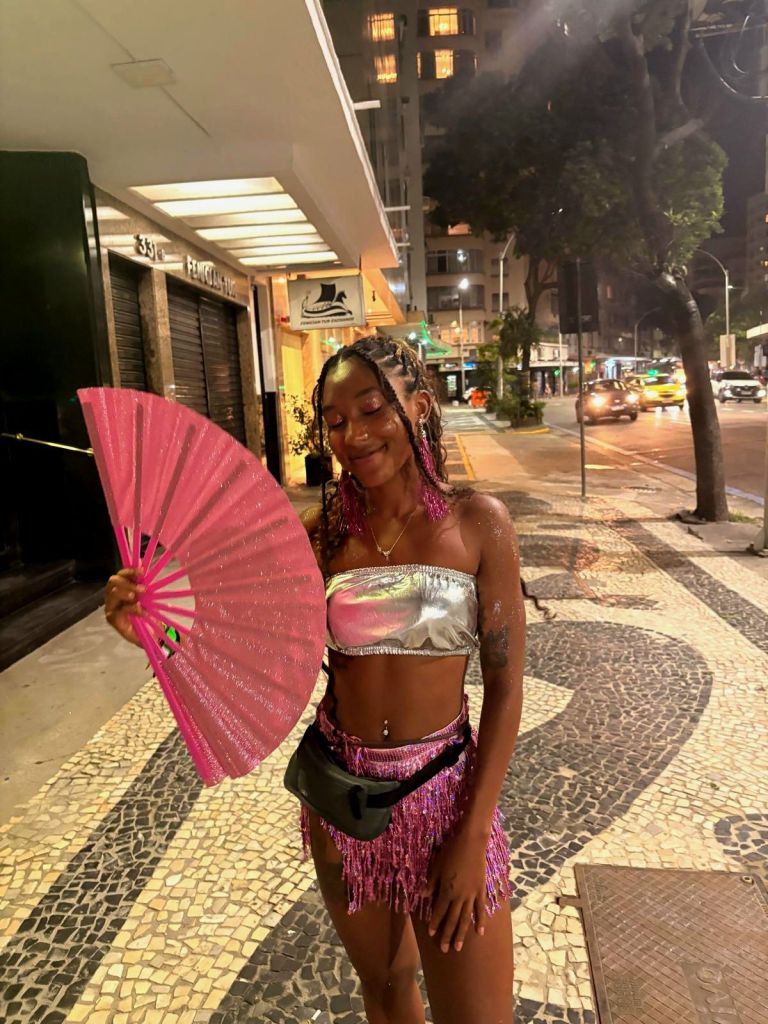
During Carnival, people wear extremely revealing outfits. Glitter, bikinis, and creative costumes are everywhere. Despite this, I never experienced uncomfortable staring, unwanted touching, or harassment.
The atmosphere felt respectful. If someone approached you and you said no, they respected that.
Compared to some other travel experiences I’ve had, this is the city where I’ve felt the most comfortable and safe socially.
Of course, common sense still applies:
- Stay aware of your surroundings
- Don’t flash valuables
- Avoid unfamiliar, less busy areas late at night
But overall, Rio felt much safer than the internet sometimes makes it seem.
3. Transportation in Rio
Rio has several transportation options, and getting around the city is fairly easy.
Metro
The Rio metro system is one of the fastest and cheapest ways to travel.
You can purchase a rechargeable metro card and add money whenever needed.
A single ride costs roughly 6 Brazilian Reais (about $1 USD).
The metro is especially helpful because it allows you to avoid Rio’s heavy traffic.
One unique feature of the metro system is the women-only train cars during weekday commute hours. These operate during parts of the workday and were created to help improve safety and comfort for female passengers.
The trains felt clean, organized, and very easy to use.
Buses
Buses are another affordable transportation option in Rio.
They’re especially useful if you want to travel short distances or see more of the city along the way. We took the bus from Sao Conrado to Ipanema when beach hopping and the views were incredible.
One of the best things is that Google Maps works extremely well with Rio’s bus system. It tells you:
- which bus to take
- where to catch it
- where to get off
This makes navigating the system surprisingly easy even if you don’t speak Portuguese.
A bus ride also costs around 5 Reais.

Uber
Uber is widely available in Rio and rides are generally inexpensive and easy to find. Drivers usually arrive quickly, and the app works exactly the same as it does in other countries.
While we preferred to use the metro or the bus to save money and feel more connected to the community, we did use Uber occasionally. When we traveled at night or were tired after a long day of sightseeing, Uber was often the most convenient option.
4. Weather in Rio
The seasons in Brazil are opposite to those in the Northern Hemisphere.
- Summer: December – March
- Winter: June – September
If you visit during Carnival season in February, you can expect:
- hot temperatures
- strong sunshine
- high humidity
Light clothing, sunscreen, and staying hydrated in the heat are essential.
5. Experiencing Carnival in Rio
Carnival in Rio de Janeiro is one of the most famous festivals in the world.
The celebration lasts nearly an entire month, with pre-Carnival events, the main Carnival week, and post-Carnival parties.
During this time, the entire city transforms into one giant celebration filled with music, dancing, costumes, and street parties. The energy during Carnival is absolutely incredible. The entire city feels alive with excitement.
Blocos (Street Parties)
One of the most exciting parts of Carnival is the Blocos.
Blocos are massive street parties that follow a moving band or float through the city. Thousands of people join in, dancing, singing, and celebrating together.
Along the route, vendors sell drinks and snacks to keep the party going all day.
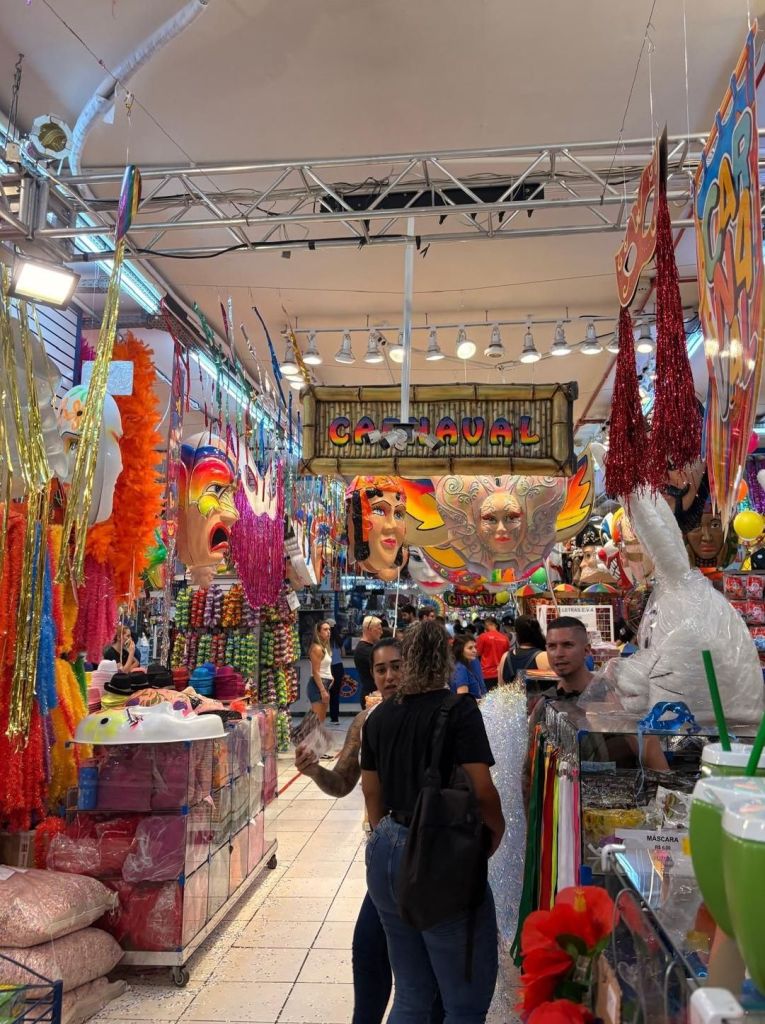
Carnival Costumes
Costumes are a huge part of the experience. People wear colorful outfits, glitter, themed costumes, and creative DIY looks.
The good news is you don’t have to spend a lot of money. You can easily find fun costumes for around $15 USD, especially in local markets.
6. Shopping in Rio
Rio is known for its stylish clothing and surprisingly affordable fashion.
There are many street markets— called feiras —where you can find clothes, accessories, and souvenirs. You’ll find these markets in popular areas like Copacabana and Ipanema.
Beach vendors also walk along the sand selling items such as:
- Bikinis
- Sunglasses
- Beach towels
- Jewelry
Prices are usually reasonable, but still, it’s okay to bargaining. It’s common to be given the tourist tax, so if something feels overpriced, it’s okay to politely negotiate.
Interestingly, many items sold on the beach are cheaper than those in malls or retail stores.
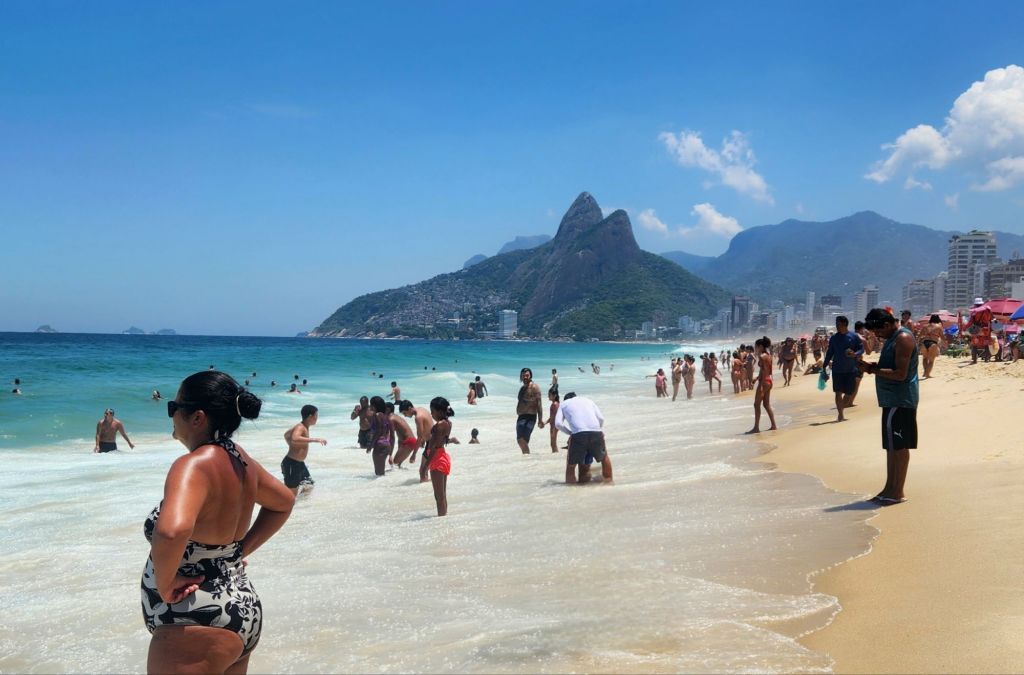
7. Rio’s Famous Beaches
Rio’s beaches are some of the most famous in the world.
My favorites were:
- Copacabana Beach
- Ipanema Beach
- Vidigal Beach
Each one has a slightly different atmosphere, but all of them are beautiful and lively.
When I visited, the waves were extremely strong near the shore. They were powerful enough to knock you over, which honestly made it pretty fun. If you swim farther out, the water tends to become calmer.
Beach Safety
The beaches felt very safe overall. Vendors rent umbrellas and chairs, and there are always plenty of people around relaxing, playing sports, or swimming.
When I went swimming, I would usually ask someone nearby to keep an eye on my bag. This seemed to be a normal and accepted practice.
8. Brazilian Food
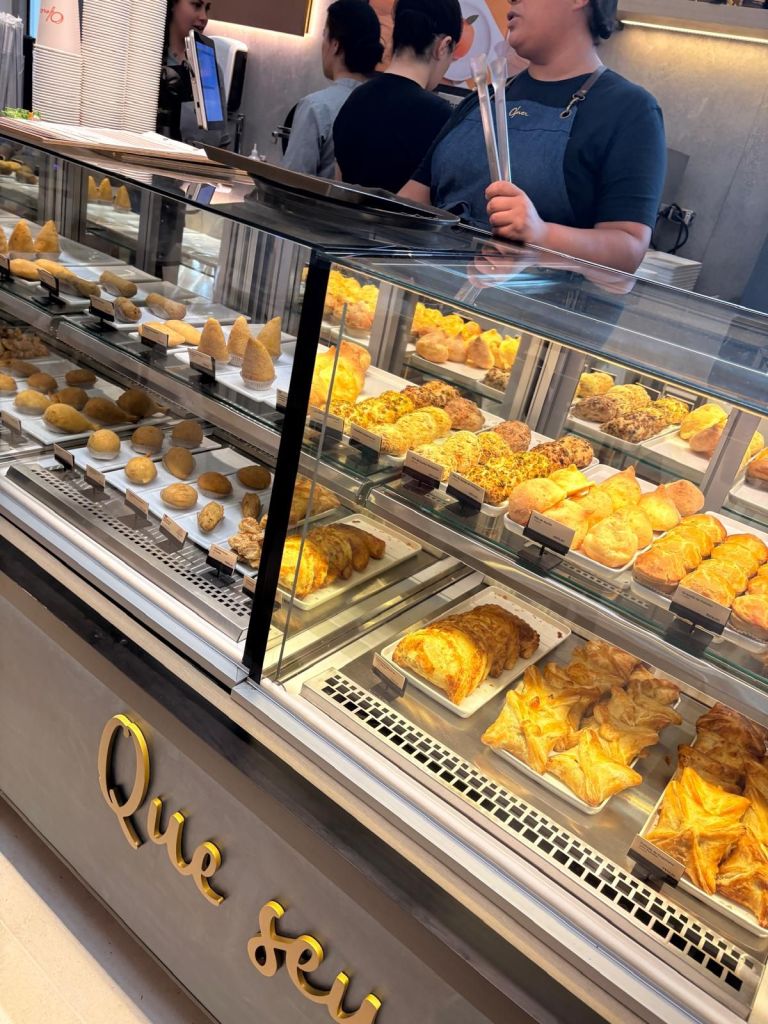
Brazilian food was one of the highlights of the trip.
Some of the dishes I tried for the first time included:
Pão de queijo – cheesy bread made from cassava flour
Tapioca crepes – gluten-free crepes made with tapioca starch where you can add savory toppings (cheese, egg, meat, tomato, etc.) or sweet (chocolate, strawberries, banana, etc.)
Coxinha – fried pastry filled with meat — but I had a vegan one
Brazilian cuisine also includes plenty of:
- Grilled meats
- Rice and beans
- Fresh pastries
- Tropical fruit juices, and acai bowls
Another nice surprise was the wide variety of international restaurants in Rio. If you ever want a break from local cuisine, you can easily find Italian, Japanese, or vegan food.
9. Language in Brazil
The official language of Brazil is Portuguese. While I do not speak Portuguese, I do speak both English and Spanish.
In tourist areas, many people spoke at least some English. Interestingly, I found that more Brazilians seemed to learn English than Spanish.
However, because Portuguese and Spanish share so many similarities, if they only spoke Portuguese, I could still communicate with them by speaking Spanish.
If you only speak English, you’ll likely struggle a bit outside tourist areas, but translation apps like Google Translate make things much easier.
I recommend learning atleast a few Portuguese phrases, as those go a long way in showing respect and effort to locals.
10. Culture & Social Norms in Rio
Rio has a culture that feels incredibly expressive, open, and relaxed.
The city reminded me a lot of San Diego, one of my favorite cities in the United States, because of its beach lifestyle and laid-back energy.
You’ll see people with colorful hair, tattoos, creative fashion, and strong personal style. The atmosphere feels inclusive and welcoming.
From what I observed, LGBTQ+ identity is widely accepted and simply part of everyday life in the city.
Kissing Culture
One cultural aspect I had heard about before visiting was the kissing culture. Casual kissing between people flirting at parties or social events is fairly common.
It often starts with:
- eye contact
- getting closer
- holding hands
- leaning in for a kiss
At first I was a little nervous about making eye contact because I didn’t want to accidentally signal interest. But overall the interactions felt respectful and natural.
Final Thoughts
Rio de Janeiro exceeded my expectations in many ways. The city combines incredible natural beauty with vibrant culture, amazing food, and some of the best nightlife and festivals in the world.
Between the beaches, the music, Carnival celebrations, and the welcoming atmosphere, it’s a place that feels alive with energy.
If you’re thinking about visiting Brazil, Rio is definitely a destination that should be on your list.
If you’re planning your own trip to Rio and want a full breakdown of costs, I documented every dollar I spent—from accommodation and transportation to food and activities.
You can read the full guide here: Everything I Spent During My Trip to Rio de Janeiro.



 Wandering Morena
Leave a comment