The Dominican Republic and the United States couldn’t be more different when it comes to culture. The DR is family-oriented, lively, and a little chaotic—yet somehow still relaxed and carefree. There are plenty of things here that make me want to bang my head against the wall, but there are also things in the DR that just make sense.
Here are a few that the U.S. could definitely learn from:
1. Plato Del Dias
During lunchtime (and sometimes breakfast or dinner), most local restaurants offer a plato del día—a daily plate that’s both filling and affordable. It’s typically served in a takeout container, buffet-style, where you choose what you want. A basic plato del día includes local food in the Dominican Republic. Think rice, beans, salad, and a type of meat, but some places have extras like soup, avocado, plantains, or even spaghetti. If you’re thirsty, you can wash your meal down with a natural juice, smoothie, or soda.
Prices usually range from $200–$350 pesos (around $3.50–$5.50 USD), making it a cheap and convenient option for workers, travelers, or anyone who doesn’t feel like cooking. Lunch is the biggest meal of the day in the DR, and many people take a full break from work to enjoy it. You can eat it there and relax, or take it with you if you’re on the go.

2. Guaguas
Guaguas are the beating heart of Dominican transportation. They’re small, affordable buses that run throughout the day—everything from guaguitas (smaller local ones) to larger intercity buses that connect towns across the country.
A short ride might cost just a couple of dollars, and even the longest routes, I’m talking 4 hours across the country, won’t go over $10 USD. You can get almost anywhere in the country by guagua. They’re not always the most comfortable ride—sometimes there’s loud music, lots of people, and a “sardines in a can” vibe—but they get the job done.
Flag one down by waving from the side of the road, and if you’re stuck in the back of a smaller one, you’ll pay by passing your money through other passengers until it reaches the driver. It’s a shared experience in every sense of the word. And if you’re taking a longer trip, you can upgrade—some of the fancier express guaguas come with comfy seats, Wi-Fi, and even movies.
Check out my Guagua Guide for tips on how to ride like a local!

3. Carro Publicos
Think of carros públicos as shared taxis that follow fixed routes—kind of like a carpool system that never stops running. They’re most common in big cities like Santo Domingo. You just hop into one heading in your direction, squeeze in next to strangers (personal space is optional here), tell the driver whereabouts you’d like to go, and hop out wherever you need.
They’re fast, reliable, and ridiculously cheap—usually under $1 USD per ride. Sure, you might have to walk a couple minutes to your exact destination, but the savings and efficiency make up for it. It’s public transportation done right. While this system might not work everywhere, it fits perfectly with the DR’s close-knit, community-oriented culture.
4. Colmados
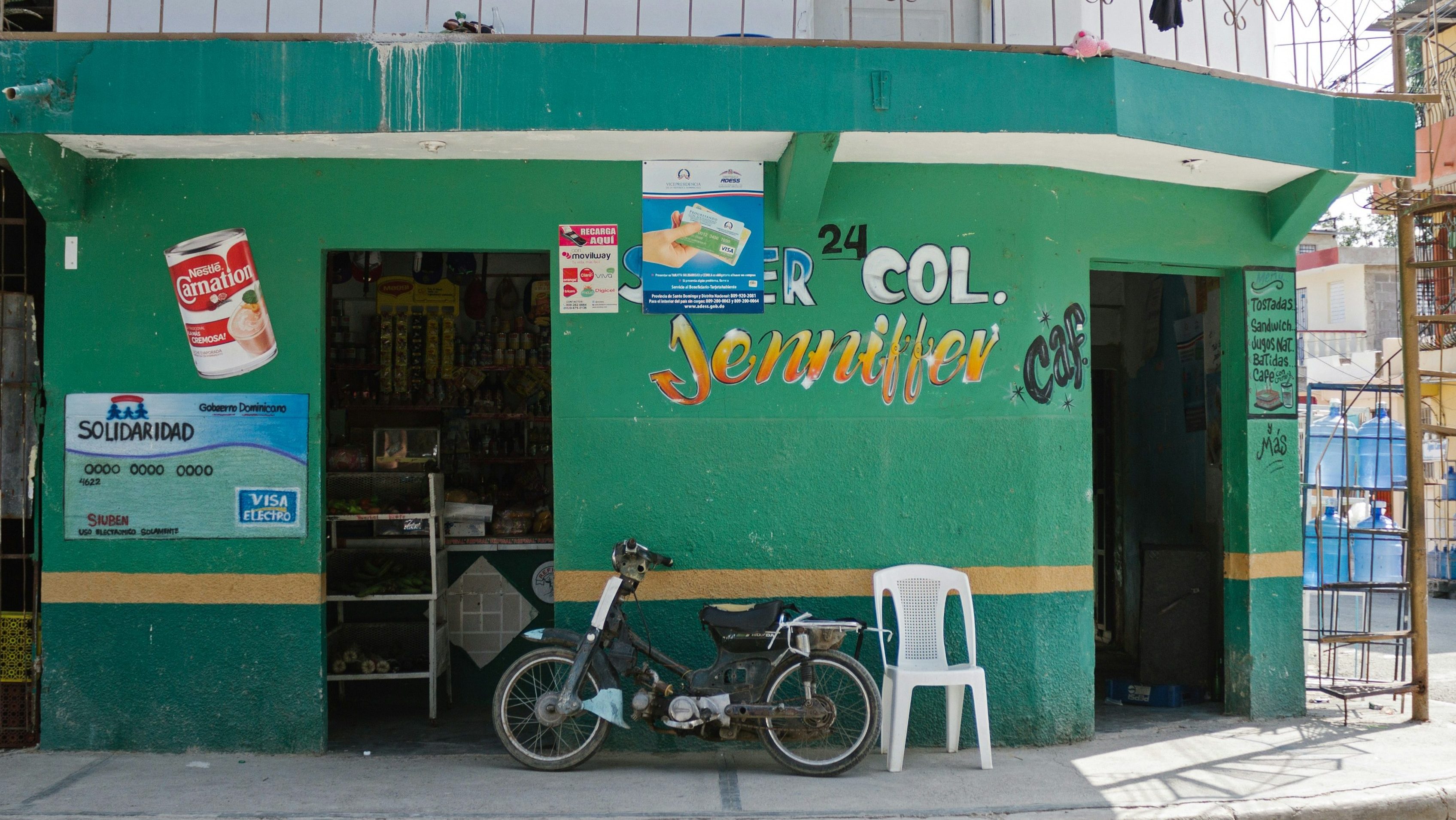
Colmados might look like corner stores, but they’re so much more. They sell nearly everything you need—sugar, eggs, butter, milk, toilet paper, bottled water, even coffee and fresh–ish pastries.
My favorite thing? You can buy things by the peso. If you’re short on cash or just need a little of something, you can say, “Dame cincuenta de azúcar” (give me 50 pesos of sugar). They buy huge bags of items from suppliers and then sell it to customers in small bags of the amount of their choice. The shopkeeper scoops, weighs, and bags it up right in front of you. It’s practical, personal, and perfect for everyday living. And if you’ve built trust with the shop owner, it’s common to be able to buy things with fiao or credit. No credit card required, just tell them you’ll pay them back once you get the money.
Many colmados also double as social hubs. In the evenings, locals gather outside to chat, drink a cold Presidente beer, and listen to bachata. Some even deliver straight to your house—just call, and they’ll send your order by moto. Be warned though: the music might be blasting until the early morning hours.
5. Sharing & Helping Nature
Dominicans are incredibly generous and community-minded. If you have a problem, they’ll help you solve it—no hesitation. Food, space, and time are all shared freely. Stop by someone’s home while they’re cooking, and you’ll almost always be offered a plate. Sit next to someone on a guagua, and don’t be surprised if they offer you part of their snack. It’s a level of generosity that feels rare in the U.S., where we’re often more focused on ourselves than our community.

6. The Music Everywhere Culture
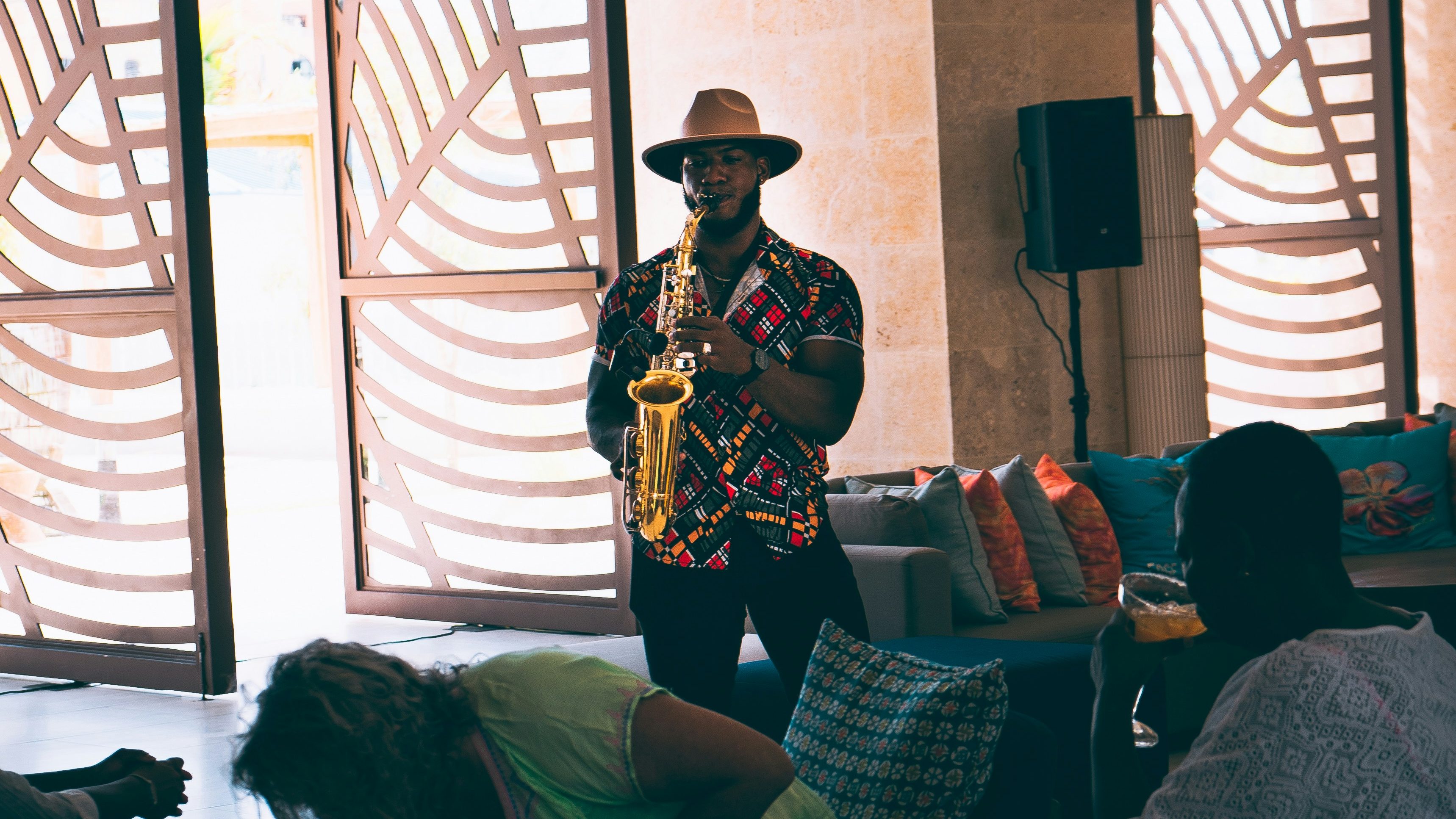
Dominicans don’t just listen to music—they live it. Bachata, merengue, and dembow are part of daily life. You’ll hear music blasting from colmados, motoconchos, buses, and front yards at almost any hour.
At first, it might seem loud or even chaotic, but it can also be a joyful vibe if you embrace it. Music turns ordinary moments—cooking, cleaning, waiting for the bus—into celebrations. In the U.S., where everyone walks around with headphones, there’s something refreshing about music that’s shared, not isolated.
7. The Neighborhood Dynamic
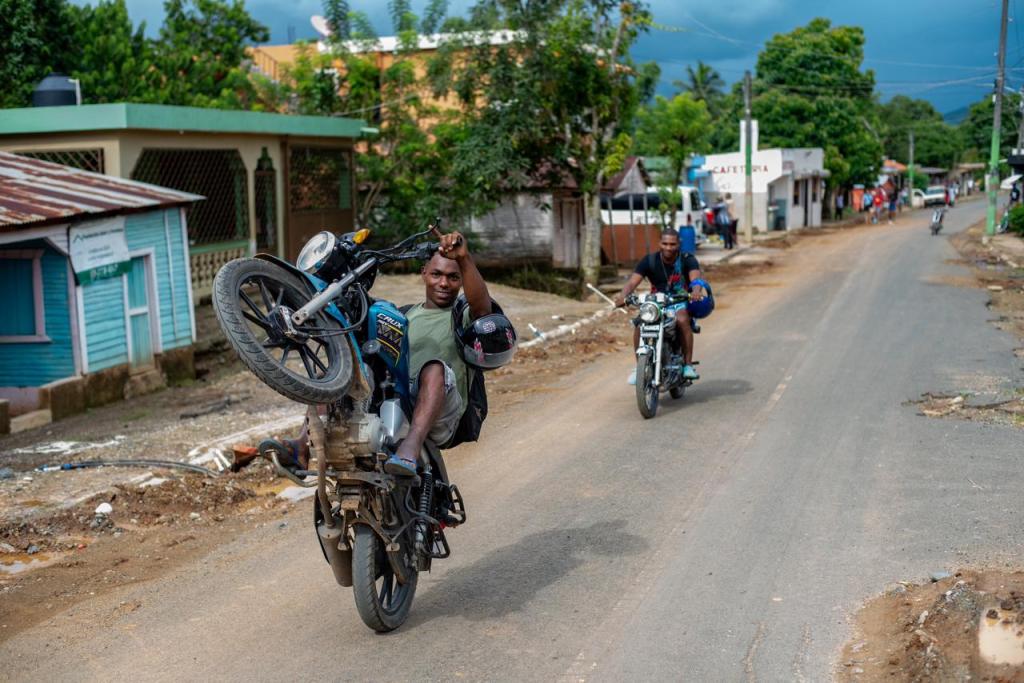
In the Dominican Republic, neighbors aren’t strangers—they’re family. People know each other, borrow sugar, share meals, and look out for one another. Kids play outside, elders sit on plastic chairs gossiping, and someone’s always ready to lend a hand. Everyone knows everyone. Family units stay together with adult children staying at home at least until marriage and starting a new family of their own. Even then, it’s common to only move down the street, so that you’re still close to your parents, aunts, uncles, and cousins.
It’s the kind of everyday connection that’s disappearing in the U.S. Rebuilding that sense of neighborhood—where people actually know who lives next door—might be one of the best cultural imports of all. It also contributes to a feeling of safety. While you can’t trust everyone, I generally feel comfortable asking to use the bathroom in strangers’ houses or walking outside alone at night. As a kid, I’d play outside with neighborhood friends while neighbors kept an eye on us if our parents were busy. In the U.S., most people barely know their neighbors. Here, everyone knows everyone—and it makes life feel safer and more connected.

8. Street Vendors
In the DR, you don’t always have to go shopping—shopping comes to you. Vendors walk through neighborhoods selling everything from avocados to brooms to fresh bread, often shouting their products so you know what’s coming.
It’s a simple system that connects people. You get fresh food without leaving home, and the vendors earn a living. It’s local, personal, and sustainable—basically, a farmer’s market that moves.
It’s different if you are in the city or in the countryside. In the cities, vendors push small carts, while in the countryside, they drive through town in vans or trucks, calling out what they’re selling through megaphones or loudspeakers.

Living in the Dominican Republic has taught me that not every “culture shock” is a bad thing. Some are little reminders that life can be simpler, more communal, and more joyful. These are the shocks that, honestly, just make sense, and that I’ll do my best to take back with me to the States.


 Wandering Morena
Leave a comment