

Think you know Spanish? The Dominican Republic might humble you. Between the lightning-fast speech, chopped-off syllables, and a slang vocabulary all its own, Dominican Spanish can feel like an entirely different language. I thought I knew Spanish before moving to the DR. I took it in high school and university, and even lived briefly in Mexico. However, I was nowhere near prepared for this specific dialect. It was faster and the words blended together. I’ve been living in the DR for almost a year now, and here are some of the phrases I’ve learned as well as resources to help you improve your Dominican Spanish. Whether you’re moving here or just visiting, this guide will help you stop sounding like a gringo and start talking like a tigre.
How Dominican Spanish Is Different from Standard Spanish
Dominican Spanish isn’t just fast—it’s also full of shortcuts. People drop S’s at the end of words, cut off syllables, and blend words together. Here are some quick differences to listen for:
- Dropping the “s” at the end of words:
Gracias → Gracia, estás bien → etá bien
- Swapping R’s for L’s:
Amor → amol, mejor → mejol
- Mashing words:
¿Tú estás bien? → ¿Tá bien?
Voy para allá → Vo’ p’allá
These little quirks make it hard to understand if you’re used to textbook Spanish. But once your ear adjusts, you’ll start picking up on patterns.
Real Dominican Greetings
Dominicans say more than just “hola.” Here’s how people actually greet each other:
- ¿Qué lo qué? – What’s up?
- Dime a ver – Tell me what’s good
- Dame luz – Fill me in / Give me the scoop
How to Respond: Say More Than “Estoy Bien” – Sound Local Instead
“Estoy bien” is correct, but if you want to spice it up with some Dominicanismos, try these instead:
- Toy jevi – I’m good (slangy and chill)
- Tranki / Tranqui – Chill (short for “tranquilo”)
- Todo bien – All good
- Tamo bien – We’re good
- Aquí – Literally “here,” but used as “I’m hanging in” or “Just here”
🗣 Example:
A: ¿Qué lo qué, loco?
B: Toy jevi, manín. ¿Y tú?
Want to Be Left Alone? Use These
Partly because of the machismo culture, Dominican men can be very forward. When I go out, men constantly comment on my body or appearance—sometimes from the sidelines, other times by approaching me directly and asking personal questions. We call these men tigueres. They shout out piropos, or catcalls on the street at women. This can easily get annoying, and sometimes they don’t know how to take no for an answer. It’s not particularly unusual to be stared at or approached repeatedly—even after clearly showing disinterest. If you need space or want someone to back off—I’ve got you covered:
- Dame banda – Leave me alone (literally “give me a break”)
- Suéltame en banda – Let me be
- Déjame quieto/a – Leave me alone (more neutral)
- No me jodas – Don’t mess with me (rude depending on tone)
Must-Know Dominican Words That Mean EVERYTHING
Perhaps the two most commonly used words in the DR:
- Vaina – Thing, stuff, situation, drama, problem—anything really. “Esa vaina está rota.” = That thing is broken.
“Qué vaina.” = What a mess / What bad luck.
- Coño – A common curse used to express emotion: frustration, shock, joy. “¡Coño, qué calor!”
“¡Coño, ganamos!”
⚠️ Coño is vulgar but very common. Use cautiously.
More Slang to Unlock Everyday Conversations
- Un chin – A little bit
- Ta to’ – It’s all good
- Eso e’ lo que hay – That’s how it is / That’s what we got
- Tiguere & Tiguera/ Tigre & Tigra – Guy / Girl with a confident, street-smart vibe
- Guagua – Public van/bus transport (Learn how to ride one here)
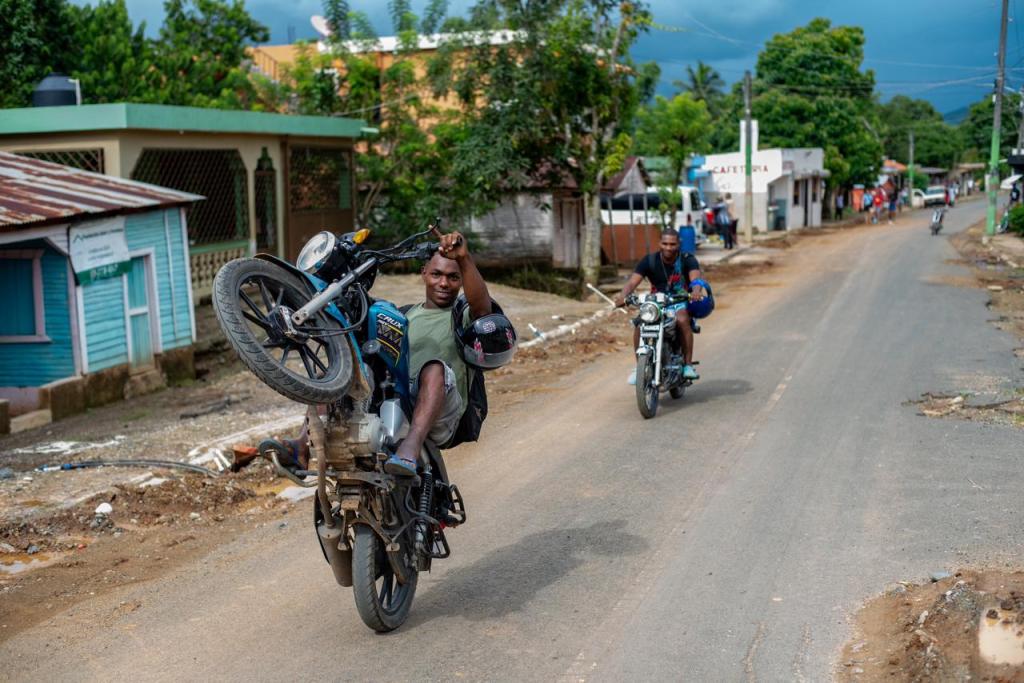
- Concho / motoconcho – Shared taxi / motorcycle taxi
- Colmado– The neighborhood corner store + bar + delivery service + hangout spot
- Un bobo – A mess or complicated situation
- Toy en olla– I’m broke
Real-Life Dominican Spanish: Phrases to Use in Everyday Places
Learning slang is fun, but here are some serious Spanish phrases you should know if you’re traveling to the DR:
At the Colmado (Corner Store)
The colmado is more than just a store — it’s a hub for social life. They often play music way too loud, and customers will sit out front with a coffee or presidente. Whether you’re buying snacks, beer, or asking for delivery, try these:
- ¿Cuánto cuesta? – How much does it cost?
- Dame / Me das [un jugo]. – Give me a juice. (You can replace jugo with anything.)
- ¿Tiene…? – Do you have…?
- ¿Puedo fiar? – Can I put it on credit? (common in tight-knit neighborhoods)
- Me lo lleva, porfa. – Can you deliver it to me, please?
👉 Bonus: Many colmados deliver everything—eggs, beer, ice, even shampoo—right to your door.
On the Guagua (Public Van or Bus)
Using public transportation like guaguas or carros públicos? These phrases will help:
- ¿Va pa’ [place]? – Are you going to [place]?
- ¿Cuánto cuesta? – How much is it?
- Me quedo aquí. – I’m getting off here.
- Déjame en la esquina. – Let me off at the corner.
- ¿Eso llega a [place]? – Does this go to [place]?
👉 Tip: Be ready to squeeze in tight.
On a Motoconcho (Motorbike Taxi)
- ¿Cuánto hasta [place]? – How much to [place]?
- Más despacio, por favor. – Slower, please.
- Aquí está bien. – Here is fine (to get off).
Talking to Locals on the Street
- ¿Dónde queda…? – Where is…?
- ¿Cómo llego a…? – How do I get to…?
- ¿Hay una parada cerca? – Is there a stop nearby?
Final Tips to Survive (and Thrive) in the Dominican Republic
- Don’t expect to understand everything—context is your friend.
- Ask: “¿Qué significa eso?” or “¿Cómo se dice eso en español normal?”
- Laugh at your mistakes. Dominicans will laugh with you—not at you.
- Want practice? Use the resources listed below and if you’re able to, the fastest way to learn is to come visit the DR for yourself.
Dominican Spanish YouTubers & Podcasts to Help You Practice
The best way to get used to Dominican Spanish is to hear it in action. Here are some Dominican (and non-Dominican) creators that can help you train your ear:
YouTubers to Follow
- William Ramos TV – Dominican travel vlogger who showcases towns, hidden beaches, and cultural gems across the country. Great for listening to authentic Dominican Spanish in context.
- ALEjateconALE – Dominican mom and content creator who shares travel tips, family life, and social commentary with a relatable vibe.
- Ducktape – A Dominican roundtable-style podcast on YouTube where young adults discuss trending topics, culture, and real-life stories.
- Bilingüe Blogs – Although this youtuber is not Dominican, he speaks fluently and is amazing at breaking down grammar and helping learners understand fast Spanish and Caribbean accents.
- Dreaming Spanish – Features comprehensible input videos from native speakers around the world, including the Dominican Republic. Especially good for beginners.
Podcasts to Train Your Ear
- Slow Dominican Spanish by José Díaz – Beginner to intermediate. Short episodes about Dominican culture and daily life, spoken slowly for learners.
- Dominican Spanish 101 with Tamara Marie & Kesia Sosa – Beginner-friendly, focused on Dominican expressions and slang with explanations.
- Conversations in Spanish by Joel E Zarate – All levels. Filter episodes by country or level. Includes Dominican guests.
- Cooltura Podcast – Intermediate to advanced. Culturally rich topics, Dominican hosts, fast-paced natural speech.
Wrapping It Up
Dominican Spanish is fast, loud, and full of energy—just like the people who speak it. The more you embrace it, the more fun you’ll have. So next time someone hits you with a “¿Qué lo qué?”, skip the awkward pause and just say “Toy jevi, loco.”
🚌 Want to Practice Your Dominican Spanish While Traveling?
If you’re planning to explore the country, don’t miss my post: How to Travel Around the Dominican Republic Without a Car (Public Transportation Guide).
It includes The Ultimate Guagua Guide — a free, downloadable resource you can save to your phone. It’s packed with essential Dominican Spanish phrases for transportation and a quick price cheat sheet.


 Wandering Morena
Leave a comment