

The Dominican Republic is one of the easiest countries in the Caribbean to explore without a car. Whether you’re a backpacker, solo traveler, or expat, you can get just about anywhere in the country by bus or guagua (shared van)—no rental car required.
But here’s the twist: many buses don’t have websites or reliable schedules. There are no apps, and things aren’t always clearly marked. That’s where this guide comes in—to help you travel like a local, navigate the chaos with confidence, and get where you’re going. Since living in the Dominican Republic, I can confidently say I’ve mastered guaguas—and I’m ready to help you do the same.
🚐 What Is a Guagua?
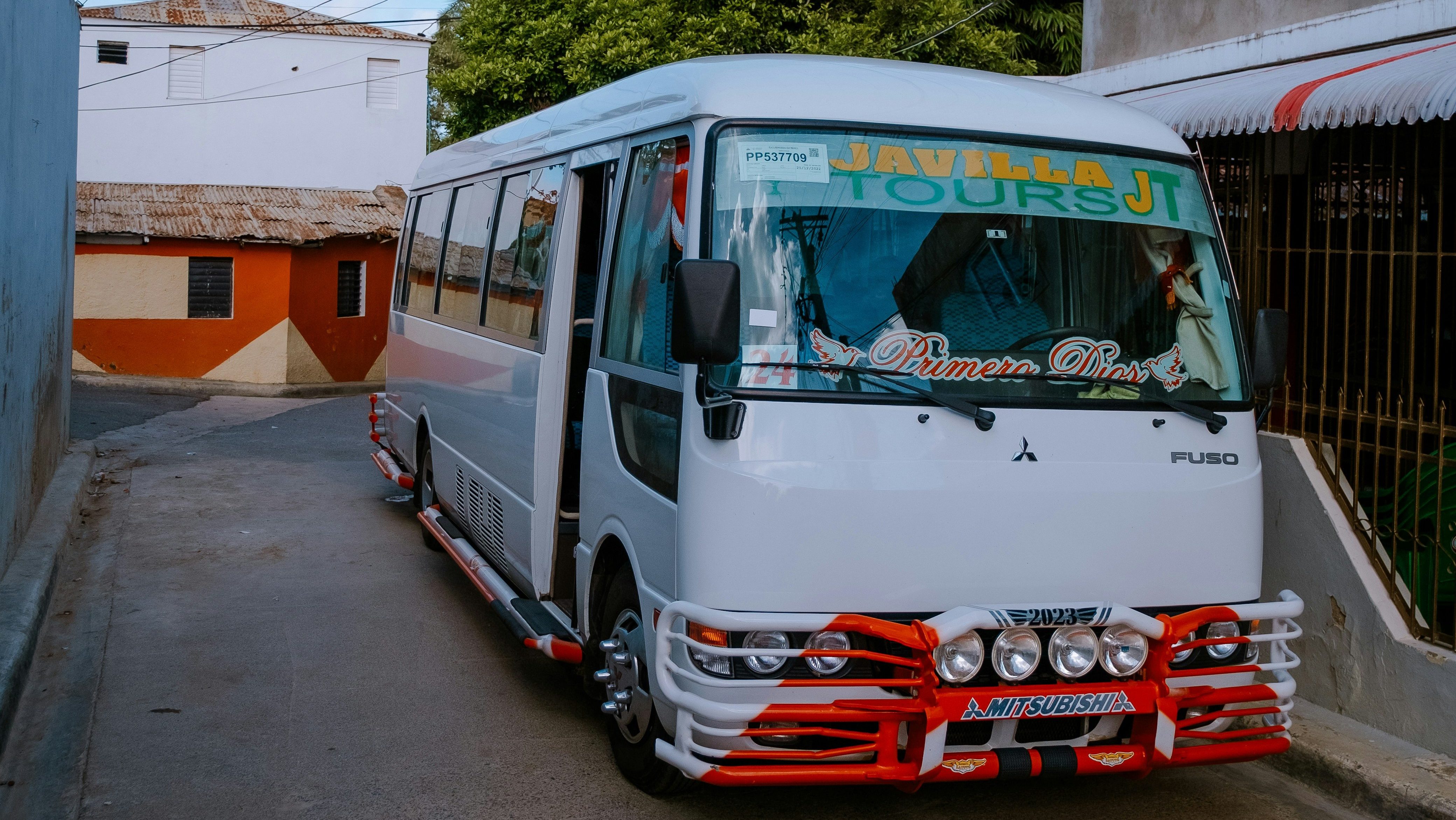
A guagua (pronounced GWAH-gwah) is a shared minibus or van that operates on semi-fixed routes all across the country. Think of it as a flexible, informal public bus system.
There are two main types:
- Large guaguas: For longer trips between cities, think similar to school or charter buses (e.g., Santo Domingo to Santiago).
- Small guaguas: Also called guaguitas for regional trips or routes between smaller towns.
These vehicles are often crowded, sometimes uncomfortably so:
- Five people might be crammed into a row meant for four.
- Some passengers sit on plastic buckets as stools, cushions in the aisle, and others are left to hang out the door.
- Expect loud music (usually dembow or bachata) and a whole lot of personality.
It’s a little chaotic, a lot informal, and completely normal. And it’s often the most authentic way to experience the Dominican Republic.
🧭 How to Navigate Parque Enriquillo: Santo Domingo’s Transport Hub
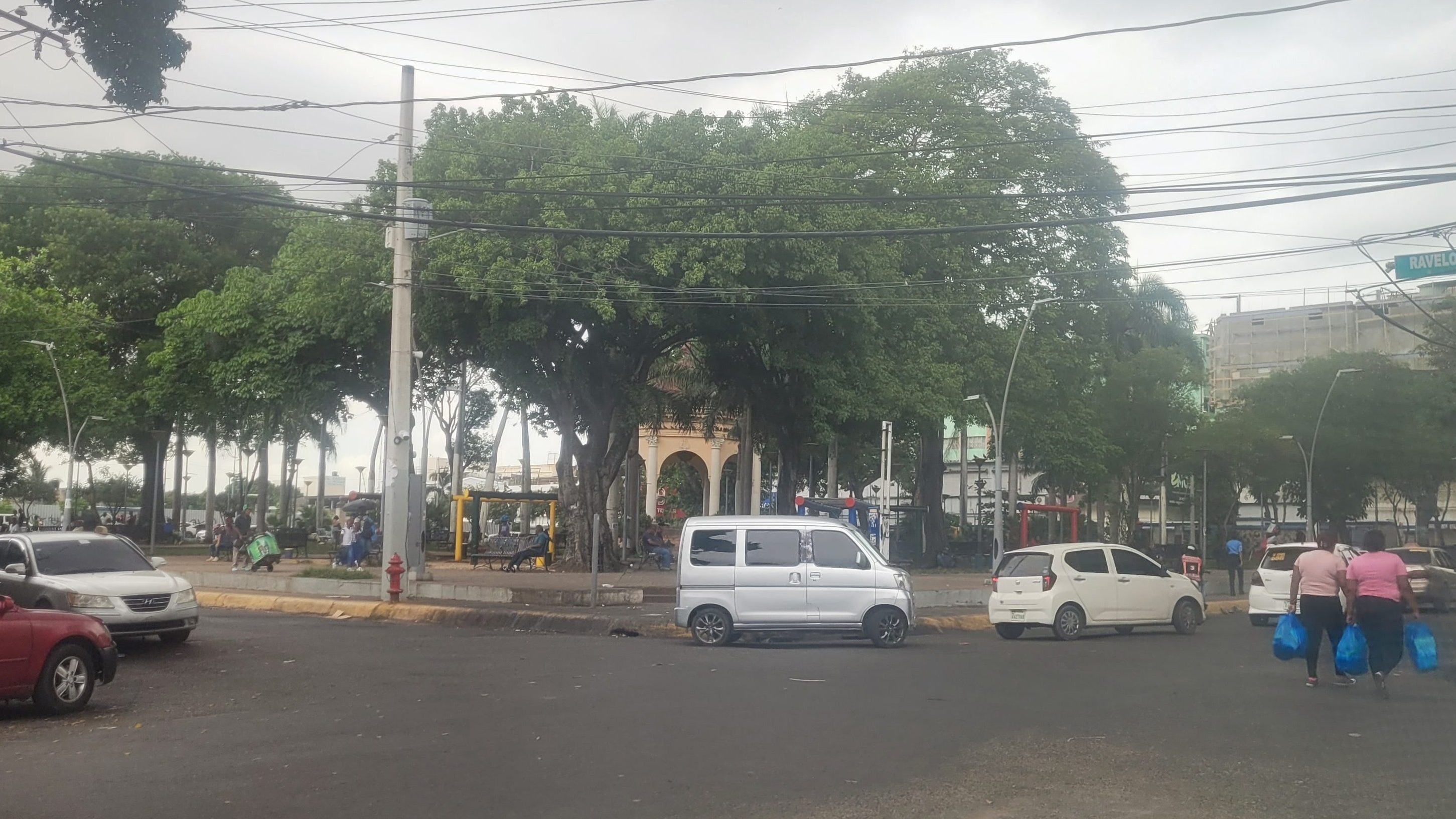
If you’re leaving from Santo Domingo, you’ll likely pass through Parque Enriquillo, the capital’s chaotic central hub for local buses and guaguas.
Here’s what to know:
- Look out for signs or just listen for drivers and helpers yelling destinations like “¡Santiago!” or “¡San Cristóbal!”
- If you’re lost, just ask:
“¿Dónde están las guaguas para [city]?”
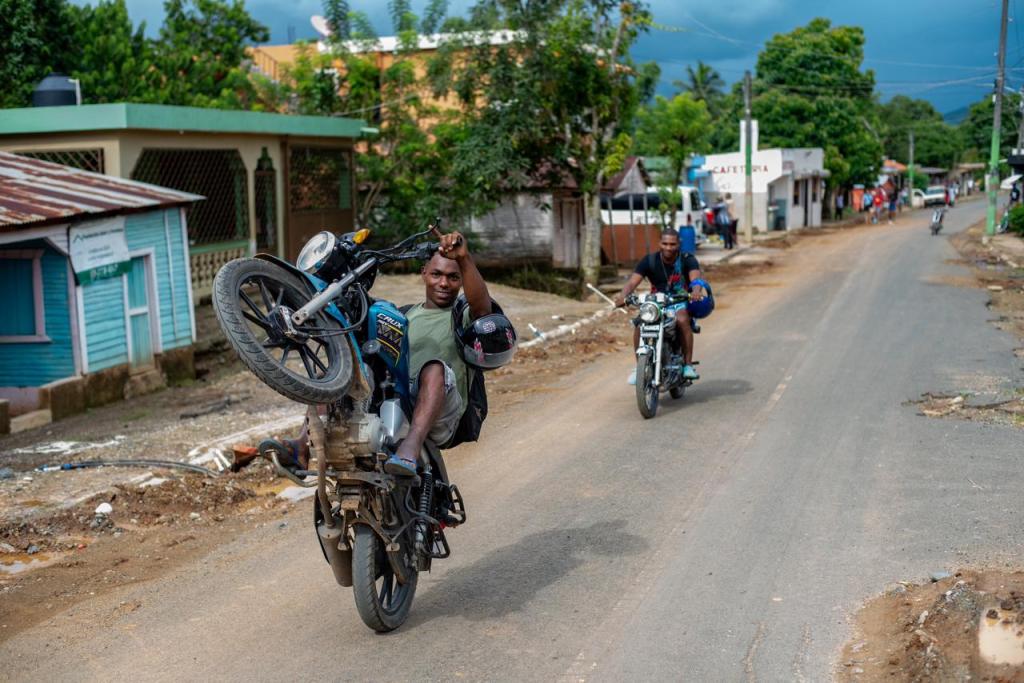
Dominicans love to be helpful and take pride in being friendly toward foreigners. Many will go out of their way to help you—even walking you to the correct bus or offering you a ride on their motorcycle (moto) just to make sure you get there.
Still, keep your belongings close—petty theft can happen in busy areas.
🗺️ How to Use Google Maps to Find Guagua Stops
Although Google Maps doesn’t list guagua routes like a formal bus system, it’s still super useful.
✅ Trick 1: Search for “Parada de [City]”
Try searching:
- “Parada de Santiago”
- “Parada de San Juan de la Maguana”
- “Parada de Puerto Plata”
These keywords often pull up user-added pins showing where guaguas leave from in any town or city.
✅ Trick 2: Look for Nearby Landmarks
Guagua stops are often located next to:
- Colmados (corner stores)
- Gas stations
- Major intersections
Zoom in, use Street View, and drop a pin so you can find your way back.
💬 Key Spanish Phrases for Riding Guaguas

Here are the most useful phrases to know when hopping on a guagua:
Who’s Who:
- El chofer – the driver
- El cobrador – the money collector/helper
What to Say:
- “¿Este va para [city]?” – Does this go to [city]?
- “¿Cuánto cuesta?” – How much does it cost?
- “¿Dónde me quedo para [place]?” – Where do I get off for [place]?
- “Déjame” or “Me deja” – Let me off here.
- “Me quedo.” – I’m getting off.
- “Aqui”, “en la esquina”, or ” en [destination]”– Drop me off her, at the corner, at [place].
- “Gracias” – Thanks (say this when getting out—it’s polite!)
- “Por favor” – Please
💡 Bonus Tips
- Typical Costs:
- RD$100–RD$150 per hour of travel for longer rides
- RD$30–RD$50 per 10 minutes for shorter rides
- Always carry small bills (RD$50s and RD$100s)
- Caribe Tours:
- Offers larger, more comfortable buses with bathrooms
- Has a website with posted prices and routes
- Less chaotic than guaguas—but sometimes less reliable for timing
- There’s almost always a guagua alternative for the same route (cheaper, less formal)
- 🤝 Dominicans Are Incredibly Helpful:
- Many take pride in helping visitors and may go out of their way to guide you.
- Don’t be surprised if someone walks you to your guagua or offers a ride on their moto just to help.
- Don’t be afraid to ask for help—it’s part of the culture.
📥 Ready to Ride Like a Local?
Want a to download The Ultimate Guagua Guide to have ready saved on your phone? It’s filled with essential Dominican Spanish phrases, a quick price guide, and tips for navigating guaguas in the DR.



 Wandering Morena
Leave a comment